Every device that uses the internet sends its packets of data through specific ports. BT Hubs are configured to handle that data transmission automatically, but sometimes you may want to create your own port forwarding rules.
Ports are virtual pathways and you can create rules that can block or forward inbound data packets to specific devices on your local network. If you are using a VPN, say for homeworking, it’s possible you might need to set up port forwarding, but you will need to know the port range information from your IT department and most VPN clients should work on the hub without this being required.
To set up port forwarding, click a dropdown for your model of Hub.
Here's how to set up port forwarding:
- Open a new web browser on a device connected to your Hub and type 192.168.1.254 in the address bar. This will open the Hub Manager
- Click Advanced Settings
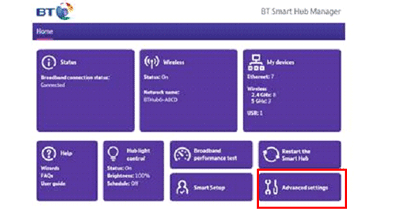
- Click Firewall
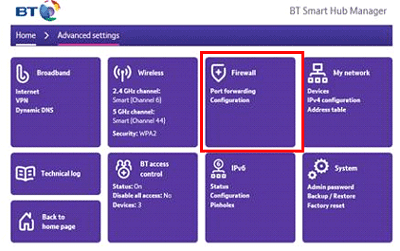
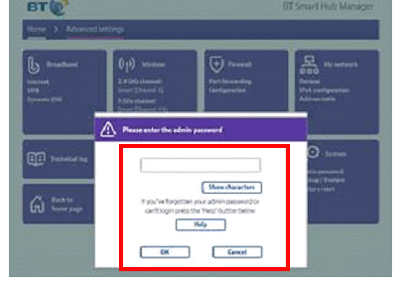
- Enter the admin password. Unless you've previously changed it, you'll find the default password on your Hub settings card on the back of your Hub. If you have changed it and now forgotten it, you can use the password override feature by click on Help to set up a new password without losing all your personal Hub settings and configuration.
- Click "Create a new port forwarding rule"
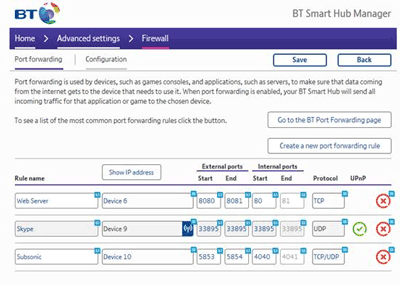
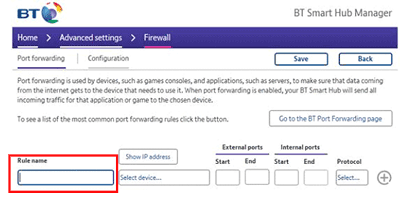
- Enter a name for the port forwarding rule you want to set up (for example, 'My webserver')
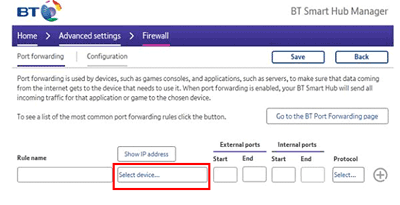
- Select the device you want the port forwarding rule to apply to
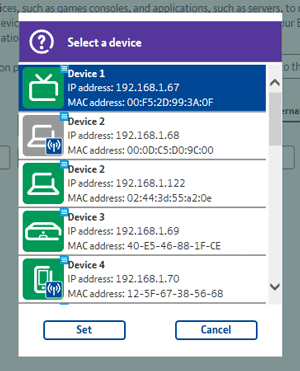
- Choose from the available devices and click Set
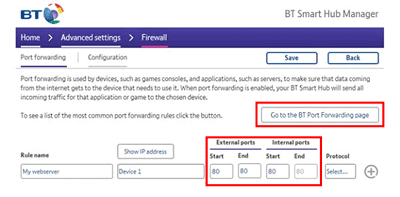
- Enter the external and internal port number range. The default external and internal port that is used for HTTP webserver is port 80, this may vary depending on how you’re set up. You will need to check the documentation provided from the hardware manufacturer, software/service provider or contact your IT support to identify the port range
- Select the protocol appropriate to the rule you are adding, and click Set
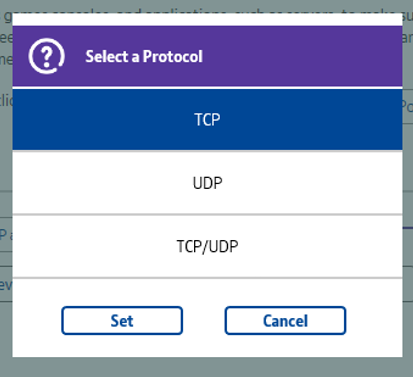
- Click the + (plus) sign

- If you need to open multiple ports within your new rule you can, repeat the process for the new ports you want to add
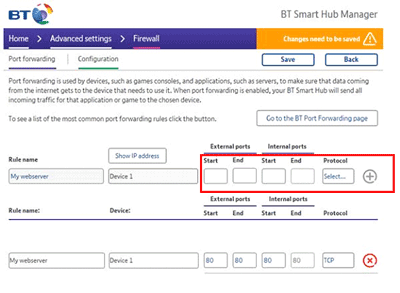
- Once you have finished adding - remember you need to save your changes. Click Save

- Once saved, your new rule will appear on the table
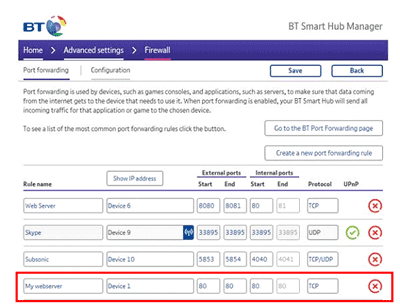
You can edit names and devices anytime you want. Remember you need to save any changes you make.
The BT Mini Hub doesn't support application sharing or port forwarding.
Here's how to set up port forwarding:
- Open a new web browser on your connected device and type 192.168.1.254 into the address bar. This will open the Hub Manager
- Click Settings

- Enter the admin password. Unless you've previously changed it, you'll find the default password on your Hub settings card on the back of your Hub
- Click Advanced Settings

- Click Continue to Advanced Settings
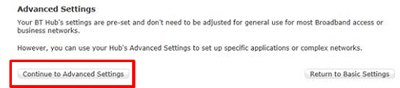
- Click Port Forwarding

- Check to see if the game or application is listed in the "Game or Application" dropdown

- If listed, select the relevant game or application and then select your device on your home network
- Click Add
- Click Apply
What to do if the game or application is not listed
If it's not listed you'll need to create a new port forwarding rule.
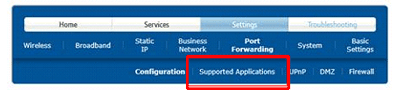
- Click Supported Applications
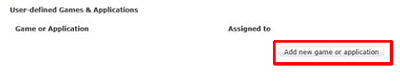
- Click Add new game or application
- Enter a name for the game or application
- To create a variant of a game or application that is already defined select Yes
- To add a new game or application select No
- Select "Protocol" from the drop down and enter "Port range" and "Translate to" as appropriate for the rule you're adding

- Click Add
- If there are multiple protocols/ranges for this rule repeat steps 4 and 5 as appropriate
- Click Apply
- Click Port forwarding from the menu
- Select the name chosen in step 3 in the "LH Game/Application" box and in "RH Device" box
- Select "User defined IP address" and then manually enter the IP address
- Click Add
- Click Apply
Still need help?
For more advice on how to get the best from your BT Hub, visit Help for Hubs >
Or, if you’ve got one of our older Hubs why not buy our latest BT Smart Hub? >
If your router wasn't supplied by BT, you can check the instructions supplied with the equipment. If you're still having trouble try our community forum. It's easy to get answers to your questions: